
Guides · 18th July 2026
Can You Put Shutters on Doors?
Glazed doors are one of the most overlooked opportunities for shutters - here's what actually works on French doors, bi-folds and sliders.
Shutters and windows go together so naturally that most people never really think beyond that. But doors, particularly glazed ones, are actually one of the best places in the home to put shutters. And once you see it done well, you will wonder why you did not consider it sooner.
The problem with glazed doors: Glass doors are brilliant for light and for making a space feel open and connected. But they come with a pretty familiar set of problems. Too much heat in summer, too much cold in winter, and depending on where the door faces, not a lot of privacy. Curtains can work but they get in the way of the door itself and tend to look a bit heavy. Blinds are better but rarely cover the full opening as cleanly as you would want. Shutters sit right at the glass, look tidy whether they are open or closed, and hold up really well in a spot that gets used constantly.
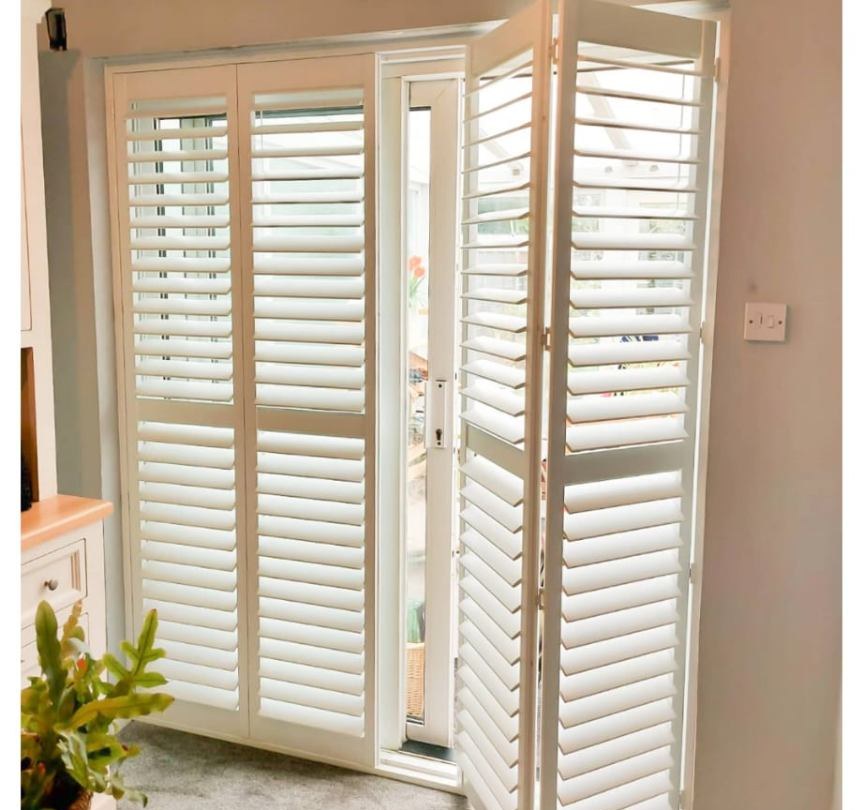
So what style actually works on a door? It depends on what kind of door you are working with, which is where it gets interesting. For a traditional door with individual glass panels, shutters fitted directly to each glazed section look incredibly neat. They follow the lines of the door, move with it when it opens, and give a really clean built in finish. For a full height hinged door that is mostly glass, full height shutters attached directly to the door frame are the way to go. They open and close with the door so nothing is ever in the way and you get complete coverage when you want it.
What about French doors? French doors and shutters are genuinely one of those combinations that just works. The classic look of plantation shutters suits French doors really well and full height panels fitted to each door give you light control and privacy without getting in the way of how the doors actually open. If you want a bit more flexibility, tier on tier shutters let you open the top half independently while keeping the lower half closed, which is a nice option if the doors face a garden or a street.
Sliding doors and bi-folds: This is where tracked shutters come in. Rather than hinging open, they slide smoothly along a track above the door opening, which makes them ideal for wide sliding doors or bi-folds where a hinged panel simply would not be practical. Push them to one side when the doors are open, pull them across when you want privacy or shade. They handle large expanses of glass better than almost anything else and look brilliant in open plan spaces where the doors lead out to a garden or terrace.
Floor to ceiling glazing: If you have a full wall of glass, tracked shutters are again the answer. They can fold back completely to leave the opening totally clear or close across the full width when you need them to. Nothing else manages that scale quite as well.
A couple of things worth knowing: Clearance is important when fitting shutters on or around doors. Everything needs enough room to operate without catching on the floor, the frame, or the door itself, which is exactly why a proper measure matters more here than almost anywhere else in the home. It is also worth thinking about materials. Doors that lead outside can be exposed to more temperature changes and condensation than a standard window, so faux wood or moisture resistant options are often the smarter choice in those spots.
The short version: Glazed doors are one of the most overlooked opportunities for shutters in the home. The right style solves the light and privacy problem completely, looks far better than the alternatives, and holds up well in a spot that gets a lot of daily use. If you have got French doors, sliding panels, bi-folds, or anything with a decent amount of glass in it, shutters are absolutely worth considering.
Not sure which style suits your doors? A home visit from someone who knows what they are looking at takes all the guesswork out of it.